Wall
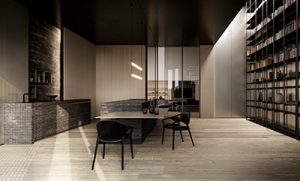
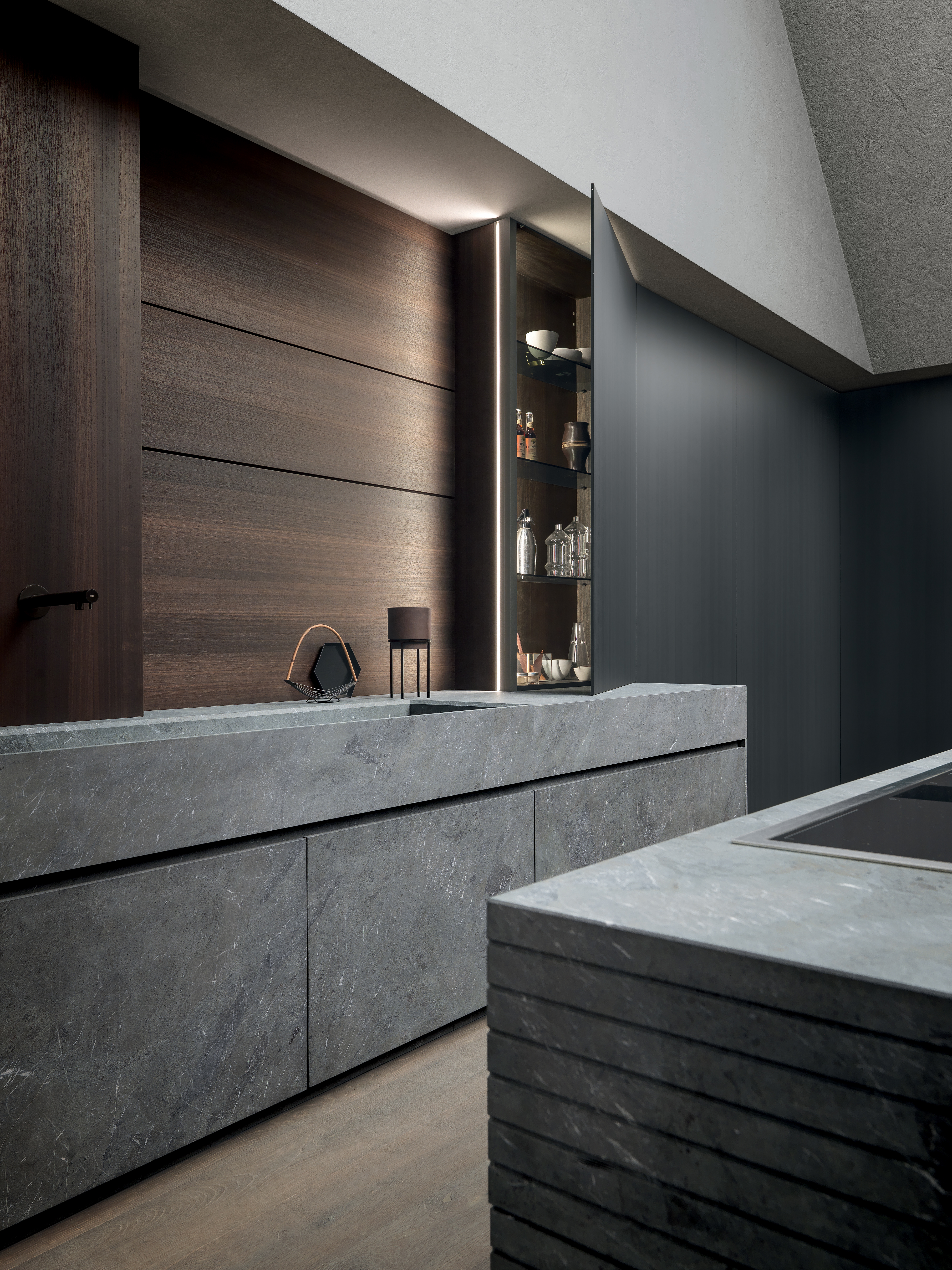
The kitchen design is developed as a coherent whole in which each element is designed to ensure maximum ergonomics of the space and a smooth relationship between the different operating zones. The organization of functions-preparation, cooking, and washing-follows a precise criterion of efficiency and comfort, so that movements are natural and intuitive during daily use.
Sliding
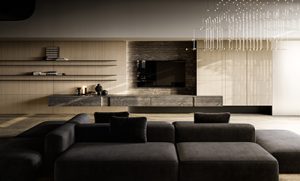
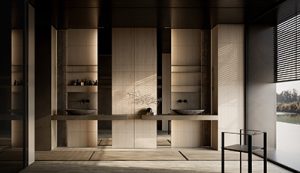
This functional approach is complemented by rigorous aesthetic research, in which materials, finishes and colors are selected to construct an elegant and contemporary visual language. Surfaces dialogue with each other with continuity, while shades and textures help define a balanced, refined environment that is consistent with the overall architecture of the space.
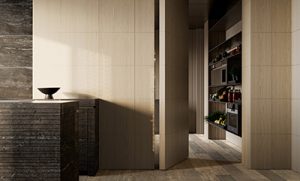
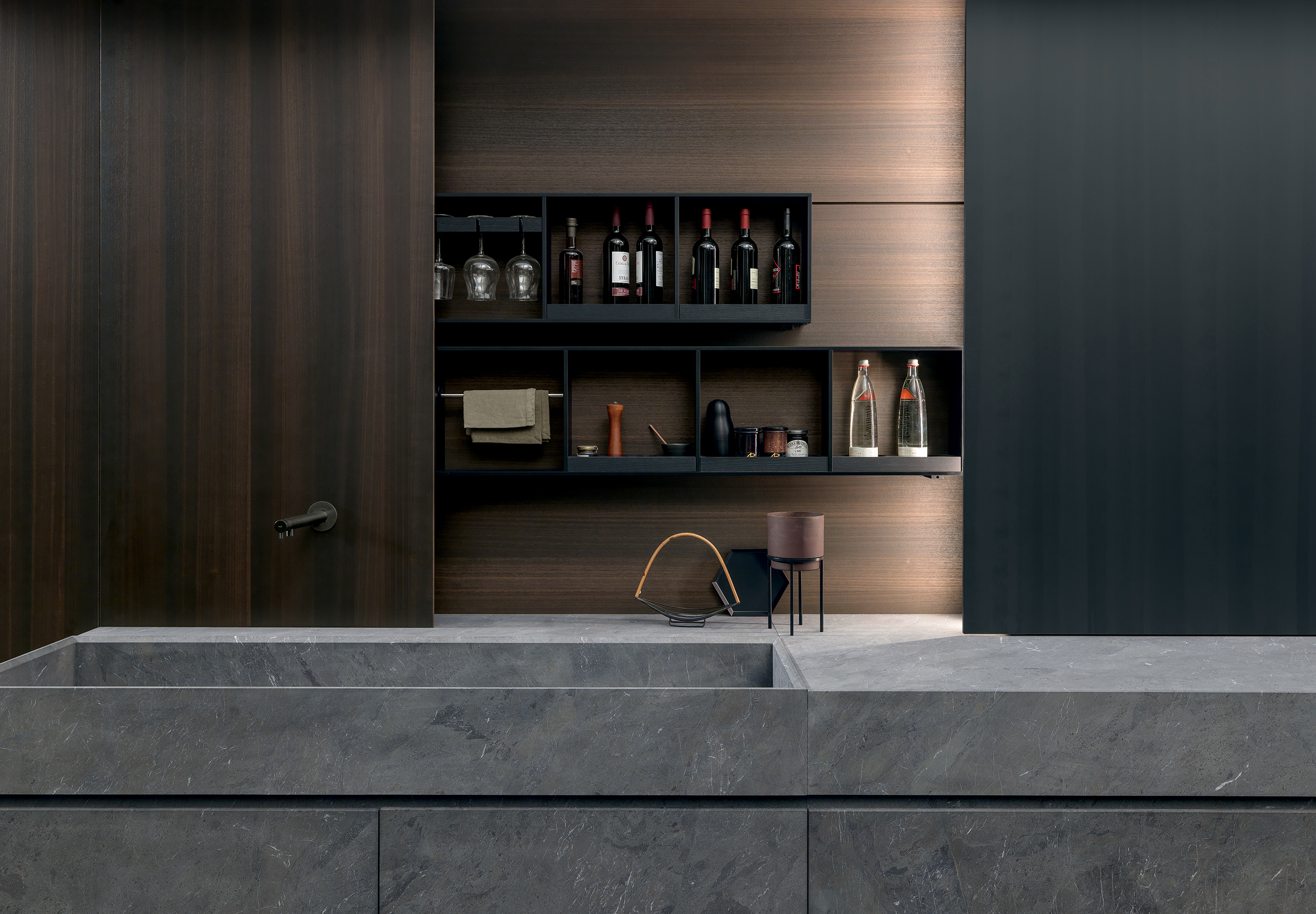
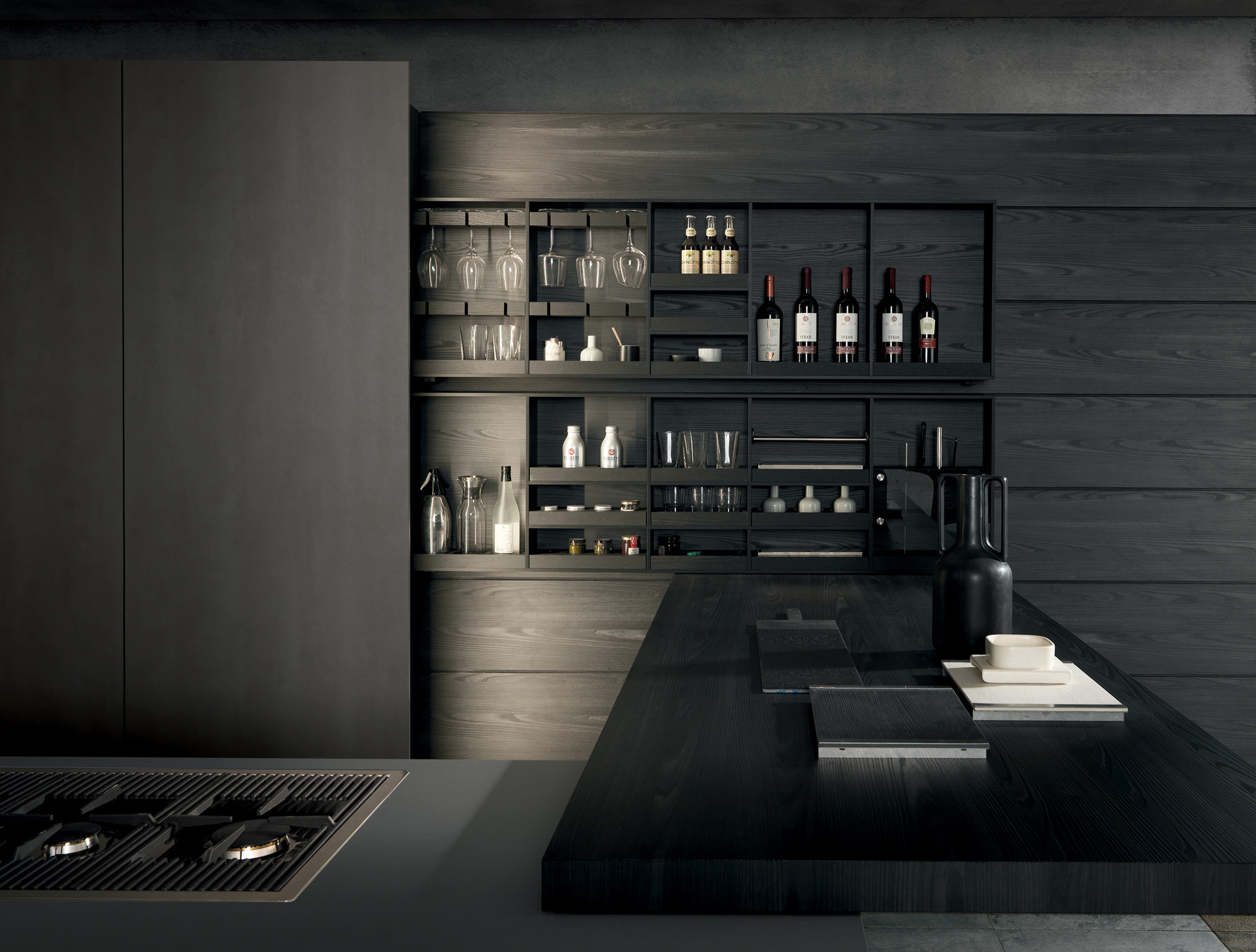
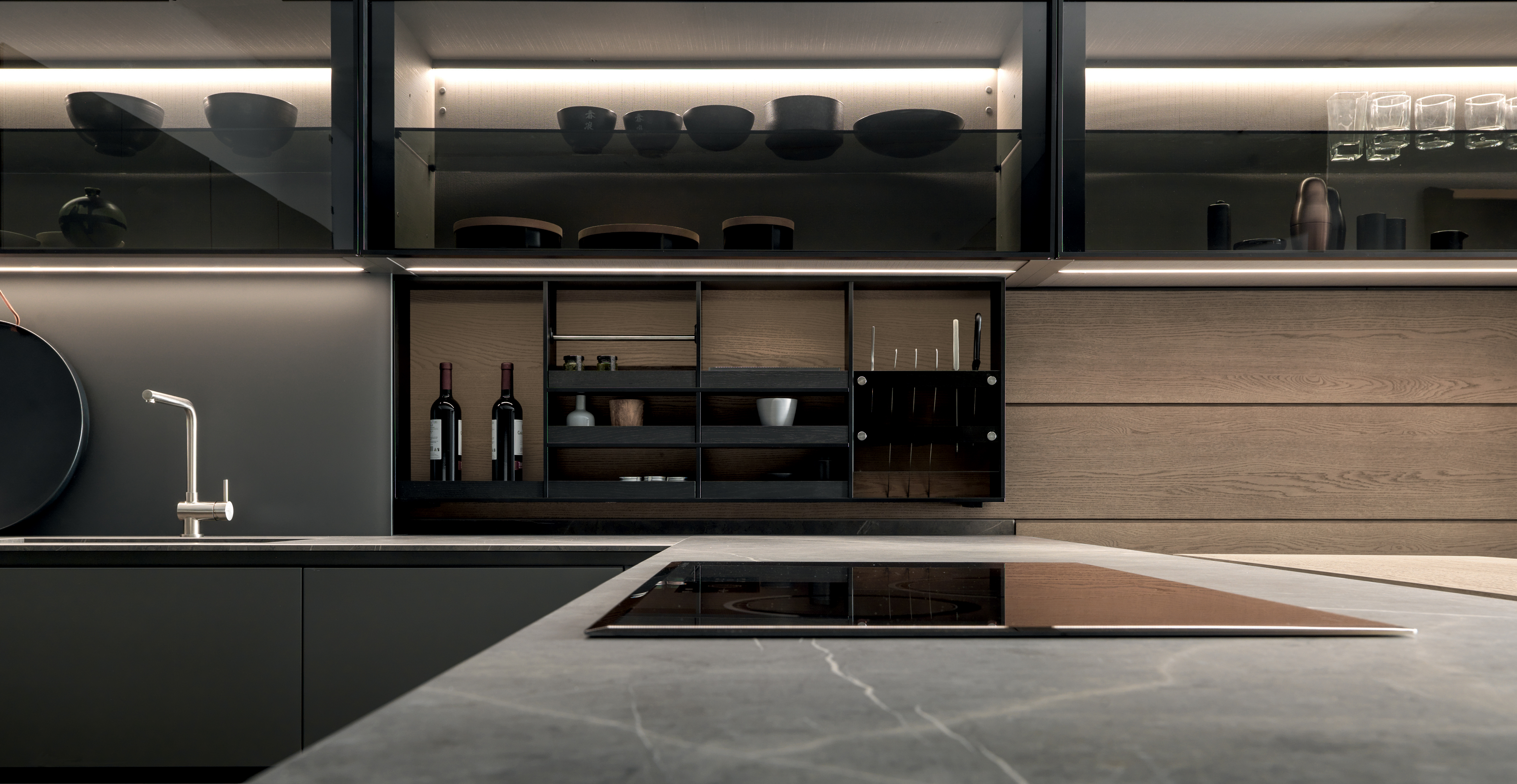
At the base of the system is an equipped panel that slides along guides built into the wall, designed to transform the vertical surface into a dynamic and highly functional operating space. This element is not static, but designed to adapt to the gestures and needs of kitchen users, making it possible to organize utensils, spices and everyday objects in an immediate and intuitive way, reducing unnecessary movements and improving the overall efficiency of activities.
Its horizontal movement introduces a fluid dimension within the kitchen composition, generating a continuous interaction between the operating and storage areas. In this way, the space is no longer rigidly divided, but becomes modular and responsive, capable of changing configuration according to the different phases of use, from preparation to cooking.
Wall helps keep the kitchen clean and uncluttered, reducing the presence of visible elements and enhancing the continuity of surfaces. The back panel, available in different finishes such as wood, glass or technical materials, becomes an integral part of the design and not just a functional bottom.
Integrated system
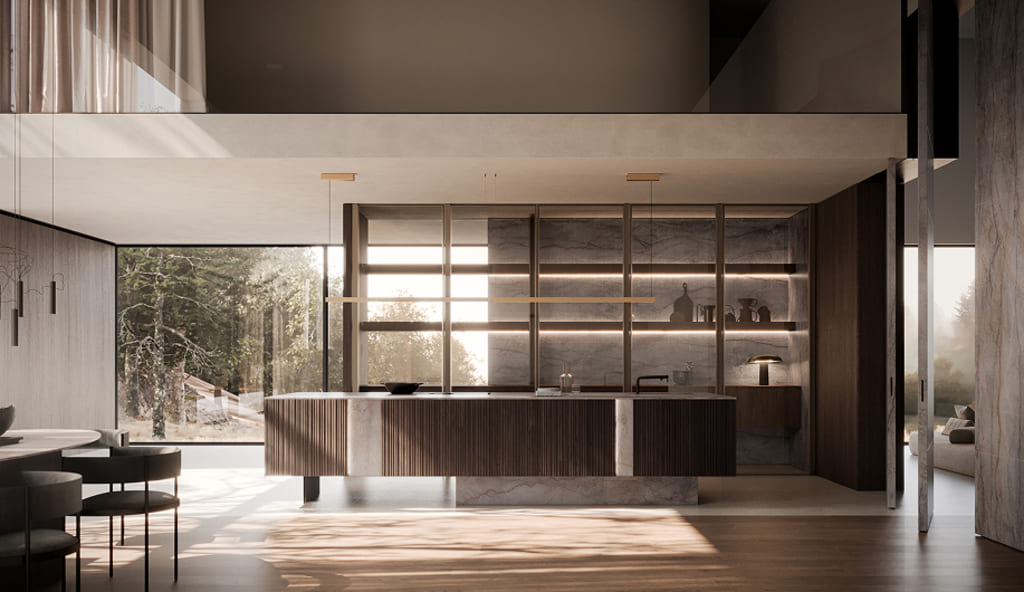
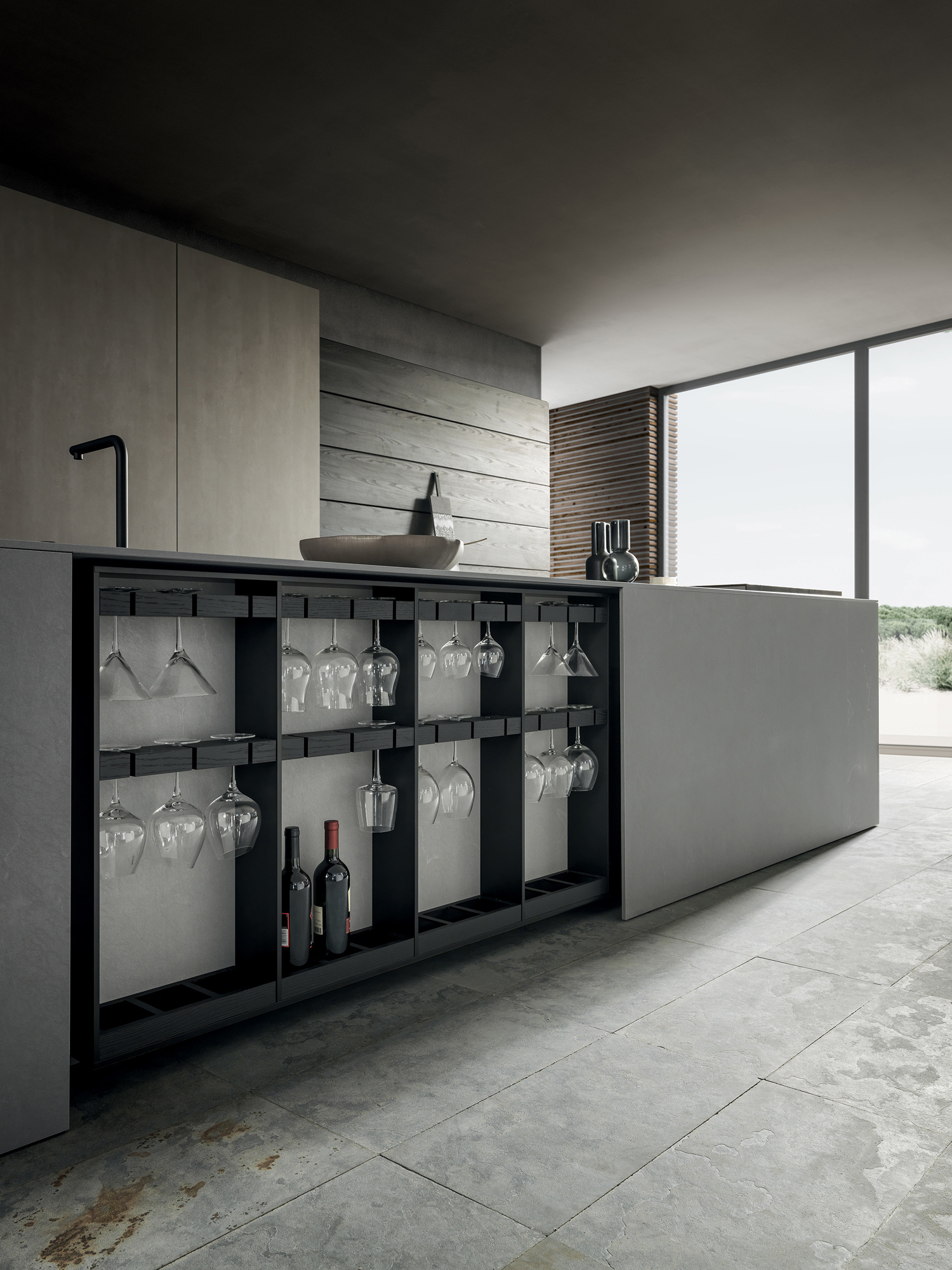
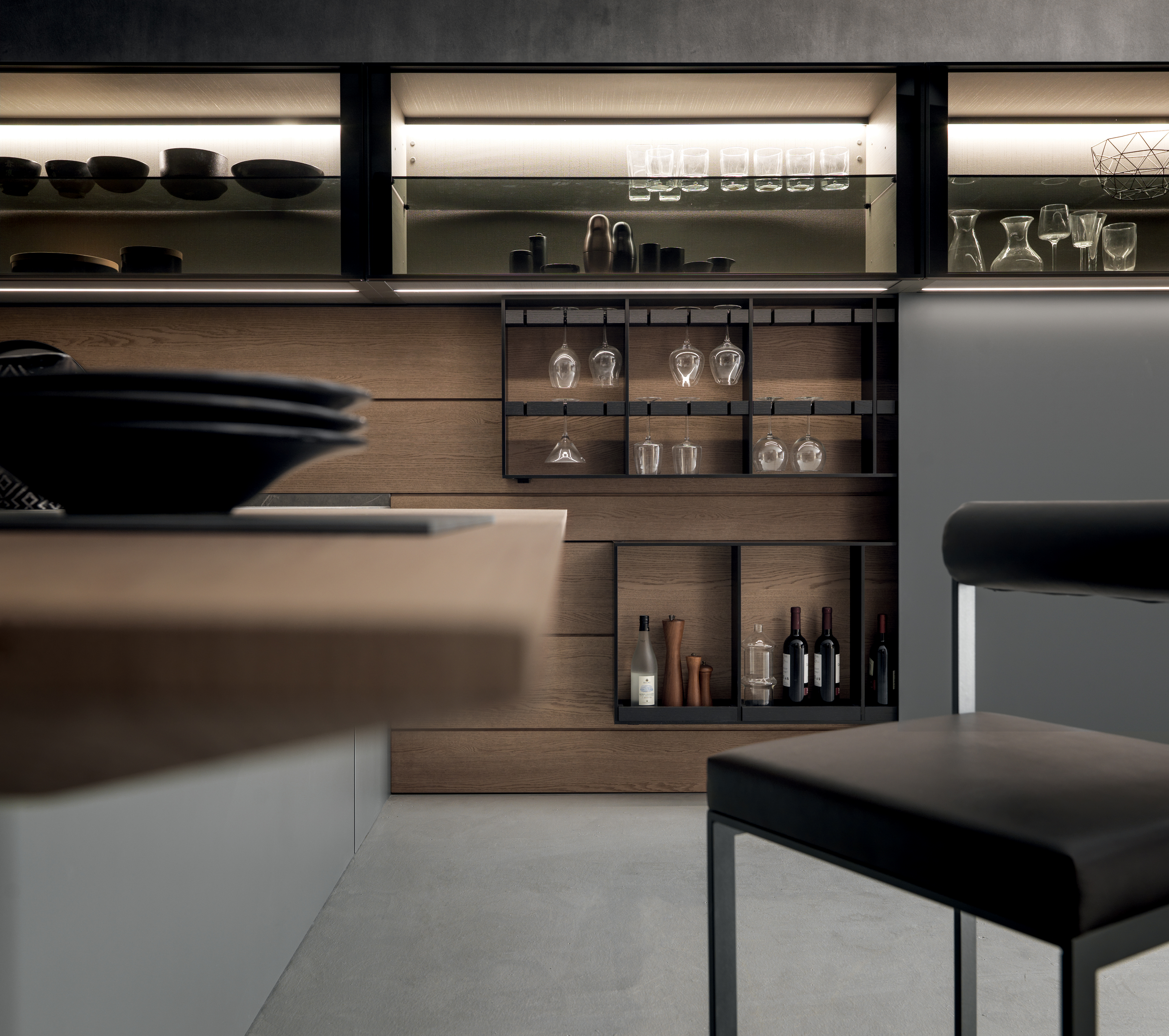
When the Wall system is integrated into the kitchen island, the design takes on an even more functional and architectural dimension, because the sliding element becomes an active part of the central volume of the kitchen.
Architectural integration
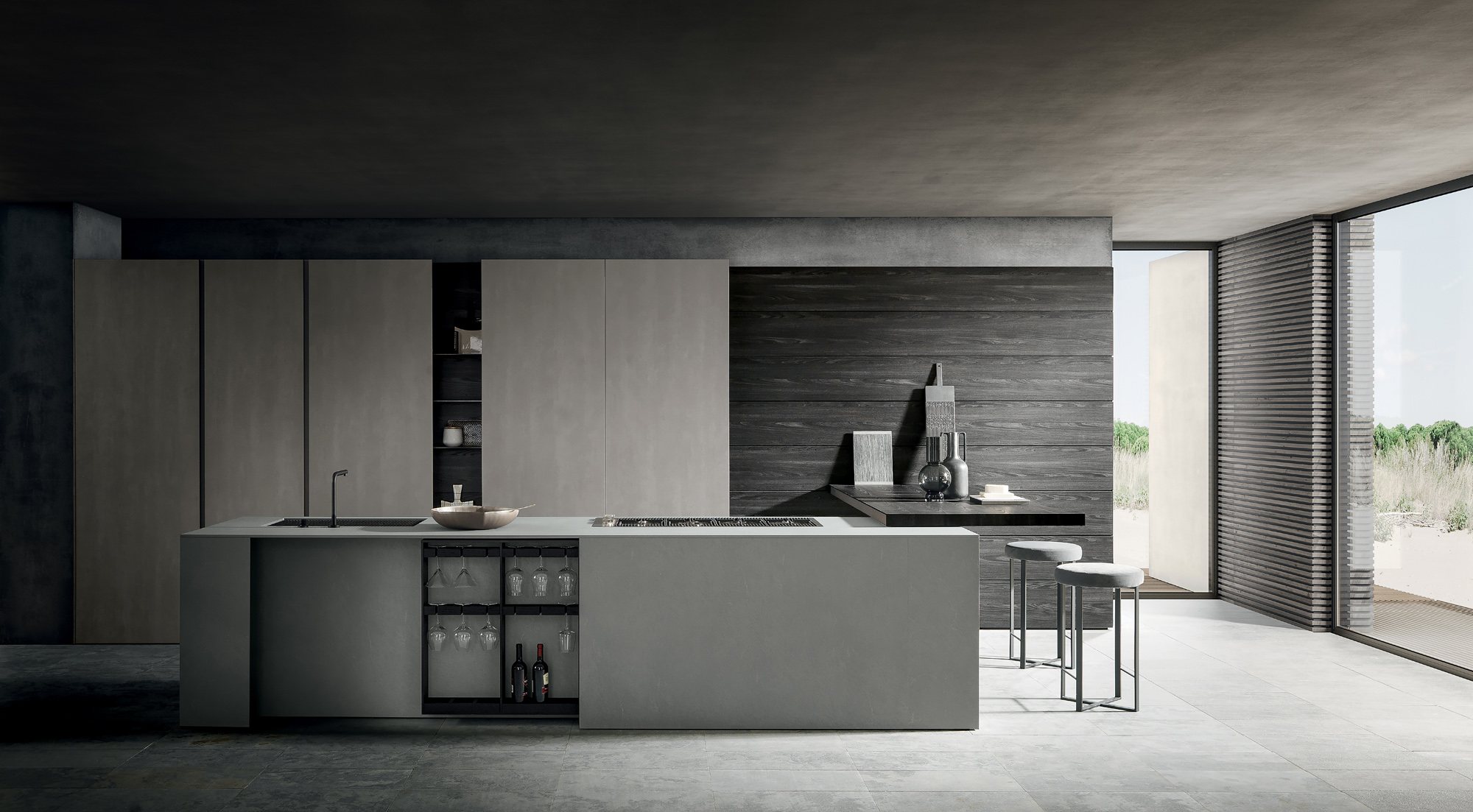
In this configuration, the equipped panel fits directly into the island or into a structure behind it, transforming it into a true operational hub. The sliding motion allows utensils, ingredients, and accessories to be immediately accessible right where the main activities, such as preparation and cooking, take place. This reduces travel and makes the countertop more efficient because everything you need can be recalled or hidden with a simple gesture.
Ergonomic design
From a design point of view, this solution represents an evolution of the traditional kitchen concept, which is interpreted as a continuous and interconnected system. Fluidity becomes the guiding principle of the design: the different functional areas are no longer rigidly delimited, but overlap and dialogue through mobile and integrated devices that amplify their versatility.
In this scenario, the kitchen space is transformed into a highly adaptive environment, capable of changing configuration according to activities and moments of use. The presence of sliding and equipped elements allows the relationship between full operation and visual order to be continuously redefined, reducing fragmentation and improving the overall perception of cleanliness and formal coherence.
01/02

Subscribe to
our newsletter
Loading
Loading